I spent weeks caring for my stepmother after her surgery while her biological son claimed he was “too busy with work.” Not long after, she passed away. When the will was read, everything went to him.
With a cold smile, he said, “Don’t act sh0cked. Stepkids come and go—blood is what truly matters.” I said nothing—not because I agreed, but because the grief already felt heavy enough without adding anger to it.
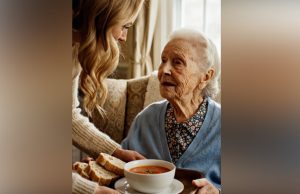
Day after day, I had cooked her meals, helped her take slow, painful walks through the living room, and stayed by her side when the pain made her lose hope.
I never expected gratitude or reward. All that mattered to me was that she didn’t feel abandoned.

His cruel pride hurt, but I let it go, trusting that time has a way of revealing the truth.
Before sunrise the next morning, my phone rang.
His voice sounded strained and frightened—nothing like the confidence he had shown the day before.
“Come to Mom’s. Now,” he said. I rushed over with unease settling in my chest, unsure what could have shaken him so deeply.
When I entered the house, I stopped short—not out of fear, but because everything felt strangely different. Her bedroom door, always kept closed, was now open, allowing the soft morning light to spill across the floor.
The air carried a faint, familiar hint of her lavender lotion. I moved slowly down the hallway, wrapped in a calm I couldn’t explain.
He was standing in the living room, holding a sealed envelope with my name written in her careful handwriting. His hands trembled as he handed it to me, unable to speak. Inside was a letter she had written long before the surgery, saved for a day she sensed might come.
She thanked me for showing her kindness from the moment I entered her life, for choosing devotion without being asked, and for giving her the feeling of family she had been missing for so long.
She wrote honestly about her son—his struggles, his emotional distance—and shared her hope that one day life might soften him enough to recognize the people who tried to stand by him.
Then, in one quiet sentence, she wrote: “What I leave behind cannot be measured in possessions, but in the hearts of those who stayed when I needed them most.”
When I finished reading, silence filled the room except for his uneven breathing. He looked at me now without arrogance—only regret. The will may have given him the house, the money, all the physical wealth.
But this letter, the proof of who truly mattered to her, had been left to me. And though it had no financial value, it carried something far greater: the truth of what we had each meant to her.
I folded the letter carefully and walked out, leaving him alone with the meaning of his inheritance. Some legacies, I realized, are not meant to be claimed—only understood.