“If You Can’t Afford Children, Maybe You Shouldn’t Have Them.”
That’s what a stranger said to me at a grocery store when I was seventy-three, trying to buy diapers for the baby my daughter walked away from—until one person spoke up and changed everything.
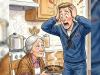
I never thought I’d be rocking a newborn again at my age. My knees ache, my fingers are stiff from years of work, and yet there I was before sunrise, humming soft lullabies and pacing a living room polished by decades of footsteps, holding a baby who had quietly become my whole world.
My name is Evelyn Parker. I raised three children, lost my husband, retired modestly, and truly believed the hardest parts of life were behind me.
I was mistaken.
Six months earlier, on an ordinary cold morning, my daughter Clara came downstairs carrying her infant, Rosie. The kitchen smelled like oatmeal and watered-down coffee. I assumed she needed a moment to breathe, like many overwhelmed new mothers do.
She gently placed Rosie in her crib, kissed her forehead, and smoothed the blanket with shaking hands.
“I just need some air, Mom,” she said.
“Take a scarf,” I replied. “It’s colder than it looks.”
She paused, hesitated, then left.
She never returned.
The next morning, after a sleepless night of rocking and comforting, I found a note by the coffee machine.
“Mom, I’m sorry. I can’t do this. Please don’t look for me.”
My legs gave out.
The police told me there was nothing they could do—she was an adult and had left willingly. Rosie’s father answered once, cold and dismissive. “That’s your responsibility now.” Then he disappeared.
My life shrank overnight.
Each day became feedings, diapers, laundry, doctor visits, and careful math. My pension barely covered bills. Savings quietly drained away. I learned which stores sold diapers cheaper, which baby foods stretched the farthest. I stopped buying anything for myself.
I reminded myself Rosie didn’t care about worn coats or canned soup. She needed love, warmth, and someone who wouldn’t leave.
The day everything shifted began like many others—badly. My back ached. The washing machine rattled ominously. And when I used the last diaper, I knew I had no choice.
I bundled Rosie into her carrier and walked to the nearby grocery store, the one with harsh lights and music too loud for thinking.
I chose carefully: the smallest pack of diapers, a couple jars of baby food, and a small piece of turkey so the upcoming holiday wouldn’t feel hollow. At checkout, my heart raced as I swiped my card.
Declined.
Again.
Declined.
Someone sighed behind me.
A woman laughed. “If you can’t afford kids, maybe don’t have them.”
Another voice mocked quietly.
My face burned. Rosie began to cry. I counted what I had—eight dollars and some coins.
“Could you take off the diapers?” I whispered to the cashier. “Just keep the food.”
That’s when a calm voice interrupted.
“Excuse me, ma’am.”
I turned, bracing myself.

Instead, I saw a well-dressed man in his late thirties, his expression steady and kind.
“Please cancel it,” he told the cashier. “Ring it up again.”
Before I could object, he paid. Approved instantly.
When a few people scoffed, he turned to them calmly.
“You just watched an elderly woman struggle to care for a baby,” he said. “You could’ve chosen kindness. You didn’t.”
The line went silent.
Outside, I thanked him through tears.
“My name is Thomas,” he said. “My mother passed recently. Helping you feels like honoring her.”
I declined further help that day. He respected that.
But the next afternoon, there was a knock at my door.
Thomas stood there with his wife, Helen, their two children, and a warm casserole.
“We’d love for you and Rosie to join us for Thanksgiving,” Helen said gently.
They didn’t just bring food. They brought laughter, support, resources, and community. They helped arrange childcare, legal assistance, and aid I never knew I qualified for.
Time passed. Rosie learned to crawl. Then to laugh. Then she said “Grandma.”
Clara never returned—but I stopped waiting.
Because sometimes family isn’t who abandons you.
It’s who stays.
And every Thanksgiving now, I bake a pie—not out of obligation, but gratitude.
Holding Rosie in the quiet moments, I’ve come to believe that this unexpected chapter—though exhausting—may be the most meaningful one of all.